
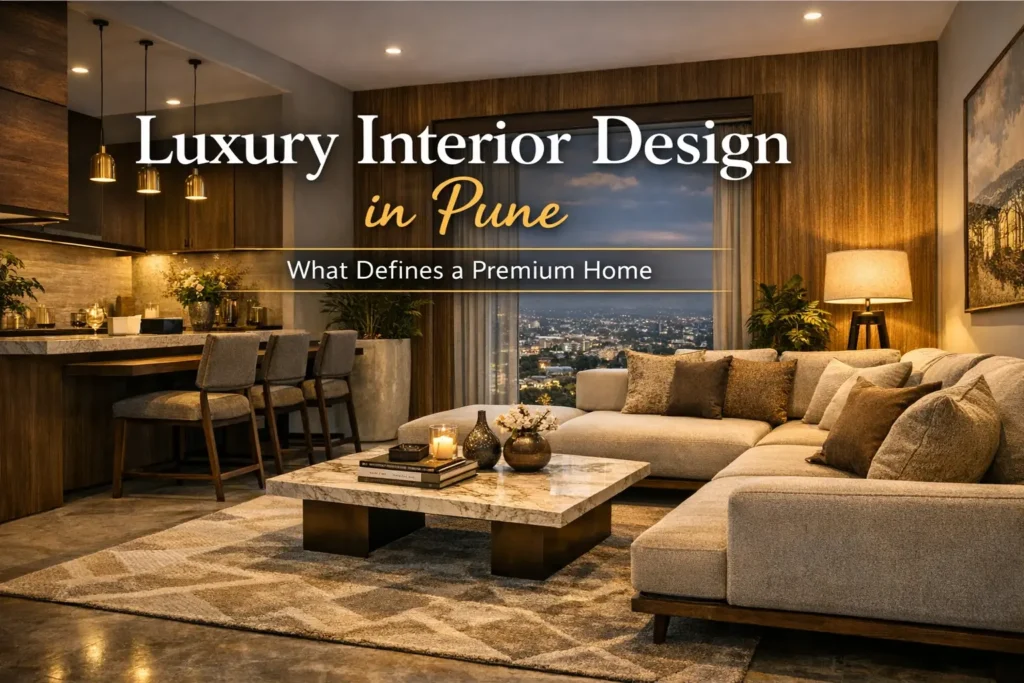
Creating a premium home is about more than expensive finishes or following the latest trend. A genuinely luxurious residence balances functionality, comfort, and lasting aesthetics — all delivered with meticulous craft and thoughtful planning. In this guide we’ll break down the design, material, technical, and service elements that set apart top-tier living spaces, explain how leading professionals approach premium projects, and provide actionable criteria you can use when evaluating options — whether you’re working with luxury interior designers in pune or defining your own brief.
What “premium” means in interior design
Luxury in interior design is intentionally broad: it can mean restrained minimalism executed at the highest level, or an expressive, bespoke richness of materials and details. At its core, premium design answers four questions exceptionally well:
- Does the space improve daily life?
- Are the materials and systems durable and refined?
- Is the design coherent — both visually and functionally?
- Was the project delivered with professional rigour and transparent process?
When those boxes are checked, a home becomes more than pretty rooms — it becomes an environment that feels effortless to live in.
The fundamental pillars of a premium home
1. Spatial clarity and flow
Great design begins with intelligent planning. Rooms must relate to one another logically, circulation should feel natural, and sightlines should be intentional. Premium homes avoid wasted corridors and create arrival moments: a foyer that frames a garden view, or a living area oriented toward natural light and ventilation.
2. Material integrity
Premium is mostly tactile. Stone, engineered hardwood, hand-finished joinery, and custom textiles speak of quality. The key is consistency: using materials in ways that respect their nature (e.g., honed stone for low-maintenance floors, solid timber for joinery).
3. Lighting that sculpts
Natural and artificial lighting are design tools. Layered lighting — ambient ceilings, task fittings, and accent uplighting — transforms surfaces and sets mood. Automated controls and daylight sensors optimize comfort and energy use.
4. Furniture and bespoke joinery
Mass-produced furniture has its place, but premium interiors often invest in custom pieces that fit the proportions, sightlines, and circulation of the home. Bespoke cabinetry that integrates appliances, concealed storage, and well-detailed hardware enhances longevity and visual calm.
5. Fit-out quality & detailing
It’s the small details — mitred joints, flush skirtings, perfectly aligned grout lines — that reveal professional craft. Premium projects prioritize site supervision and quality control so the execution matches the design intent.
Technology and comfort: invisible luxury
A premium home integrates technology subtly. Smart climate control, multi-room audio, integrated shades, and lighting presets should enhance the experience without dominating the aesthetic. Reliable MEP (mechanical, electrical, plumbing) systems designed for performance and easy maintenance are a signature of thoughtful design.
Sustainability as a luxury choice
Sustainability no longer sits at the periphery. Premium homes weigh lifecycle costs, select low-VOC finishes, and favor durable materials. Passive design strategies (orientation, cross-ventilation, solar shading) reduce energy needs while improving occupant comfort — a hallmark of long-term luxury.
Art, craft, and personalization
Luxury interiors often include one-off artworks, artisan-made objects, or curated vintage pieces. These elements add narrative and personality, turning technically excellent but anonymous spaces into places with soul. Material palettes and finishes should support the homeowner’s lifestyle and future adaptability.
The role of the designer: beyond aesthetics
A premium outcome is usually the result of a strong collaboration between client and designer. The best designers act as strategists and project managers: they translate lifestyle into spatial briefs, coordinate consultants (structural, MEP, landscape), and ensure procurement and installation meet the brief. When searching for a partner, many clients consider luxury interior designers in pune for their ability to blend local craft with global standards.
Later in the process, successful designers will anticipate future needs — flexibility in room use, wiring for upgrades, and finishes that renew rather than become obsolete.
Practical checklist: what to require from a design partner
When engaging designers, assess them against these criteria:
- Portfolio depth: Variety across typologies and consistent execution.
- Process clarity: Stages, deliverables, and timelines.
- Technical competence: Detailing drawings, MEP coordination, and site supervision.
- Procurement network: Access to reliable suppliers and artisans.
- Aftercare: Warranties, snagging lists, and service agreements.
If you are evaluating interior deisgners in pune, ask for case studies and client references that focus on delivery and post-occupancy performance, not only images.
Budgeting: cost vs. value in premium interiors
A premium budget is not a blank cheque — it’s a set of priorities. Spend where it matters: structural fixes, high-traffic materials, custom joinery, and good lighting. Trim costs on non-critical elements like seasonal soft furnishings. Architects and designers who work on luxury projects usually provide phased budgets and value-engineering options to maintain design intent while controlling spend.
Commercial thinking applied to residential projects
Some luxury residences borrow practices from commercial fit-outs — rigorous timelines, procurement discipline, and precise MEP coordination. This is where commercial interior designers in pune (specialised in large-scale or high-spec projects) can bring a useful mindset: systematic quality checks, vendor management, and tighter schedule control. The crossover is especially valuable in high-rise apartments and mixed-use developments.
Choosing finishes that age well
“Affordable luxury” often means selecting finishes that gain character with time. Examples:
- Oiled timber that can be sanded and renewed.
- Natural stones with consistent veining.
- Metal fittings with replaceable mechanisms.
Avoid highly fragile finishes in high-traffic zones; reserve delicate artisanal surfaces for controlled environments.
Acoustics and privacy — often overlooked
Premium homes are quiet homes. Good acoustic design (sound-insulated partitions, double-glazed windows, acoustic underlays) improves sleep quality and clarity in media rooms. Spatial planning should create privacy zones — quiet bedrooms away from service areas and dedicated workspaces.
Landscape and indoor-outdoor connection
A premium home treats landscape as an interior material. Terraces, courtyards, and planted balconies extend living areas and improve microclimate. Thoughtful planting schemes and water features create sensory layers and privacy in urban contexts.
How to evaluate completed work
When touring a finished project, look beyond the photos:
- Inspect joinery edges, door hardware, and lighting transitions.
- Ask to see as-built documents and operation manuals for systems.
- Test finishes in different light and at different times of day.
- Review maintenance schedules and warranties.
A reliable design firm will provide a handover package that empowers long-term care.
Common misconceptions about luxury interiors
- Luxury ≠ over-decoration. Less can be more when the craft is excellent.
- Expensive materials alone don’t guarantee success; the right material in the right place does.
- A premium home is not just for show — it must function superbly for the household’s routines.
Final Summary: Defining a Truly Premium Home in Pune
A premium home is not defined by cost alone, but by the intelligence behind its design. From thoughtful space planning and material integrity to seamless lighting, acoustics, and long-term functionality, luxury interiors are the result of careful decisions made at every stage. The most successful homes balance aesthetics with comfort, technology with simplicity, and craftsmanship with sustainability.
Working with experienced professionals ensures that these elements come together cohesively. In a design-forward city like Pune, studios that understand both global luxury benchmarks and local living patterns play a crucial role in delivering refined results. Firms such as 5 Wall Studios exemplify this approach by focusing on detail-driven planning, high-quality execution, and client-centric design processes that prioritise lifestyle over trends.
Whether you are planning a private residence or evaluating design expertise for larger projects, understanding what defines premium interiors empowers you to make informed decisions. When design intent, technical precision, and thoughtful execution align, the outcome is a home that feels timeless, functional, and distinctly luxurious.