
Interior design is not only about choosing beautiful furniture or trendy colours. A well-designed home feels comfortable, balanced, and visually pleasing the moment you walk in. If you’ve ever visited a space that looks stylish yet calm—without feeling crowded or confusing—it’s likely the designer followed a few core design principles. One such principle is the 3-4-5 Rule in interior design.
This rule is a simple yet powerful guideline used by professionals to bring harmony into any space. Whether you live in a compact apartment or a spacious bungalow, the 3-4-5 Rule helps you organise colours, textures, and décor in a way that feels natural and effortless. In this guide, we’ll break it down clearly and show how it works perfectly for modern homes in Pune.
Understanding the 3-4-5 Rule in Interior Design
The 3-4-5 Rule is based on balance and proportion. It helps avoid two common problems many homeowners face:
- Overdecorating the space
- Mixing too many styles, colours, or materials
Here’s what the rule means:
- 3 Colours – To create a consistent colour scheme
- 4 Materials or Textures – To add depth and interest
- 5 Decorative Elements or Visual Layers – To complete the space without clutter
This approach is widely used by an experienced interior designers in pune because it works for both small and large spaces, residential and commercial interiors, and even luxury homes.
Why the 3-4-5 Rule Is Ideal for Pune Homes
Pune homes come in many forms—compact city apartments, luxury villas, IT-park offices, and retail spaces. Despite the variety, many spaces face similar challenges: limited area, mixed natural light, and the need for practical yet stylish interiors.
The 3-4-5 Rule works especially well because:
- It keeps interiors organised and visually light
- It is easy to follow, even for non-designers
- It adapts to modern, contemporary, and luxury interior styles
- It suits Pune’s fast-paced lifestyle and compact urban homes
This is why the rule is commonly used byluxury interior designers in pune as well as professionals handling functional office layouts.
The “3” Colours: Creating a Balanced Colour Palette
Colour sets the mood of a space. Using too many colours can make a room feel chaotic, while too few may feel dull. The 3-colour approach keeps things balanced.
How to Choose the 3 Colours
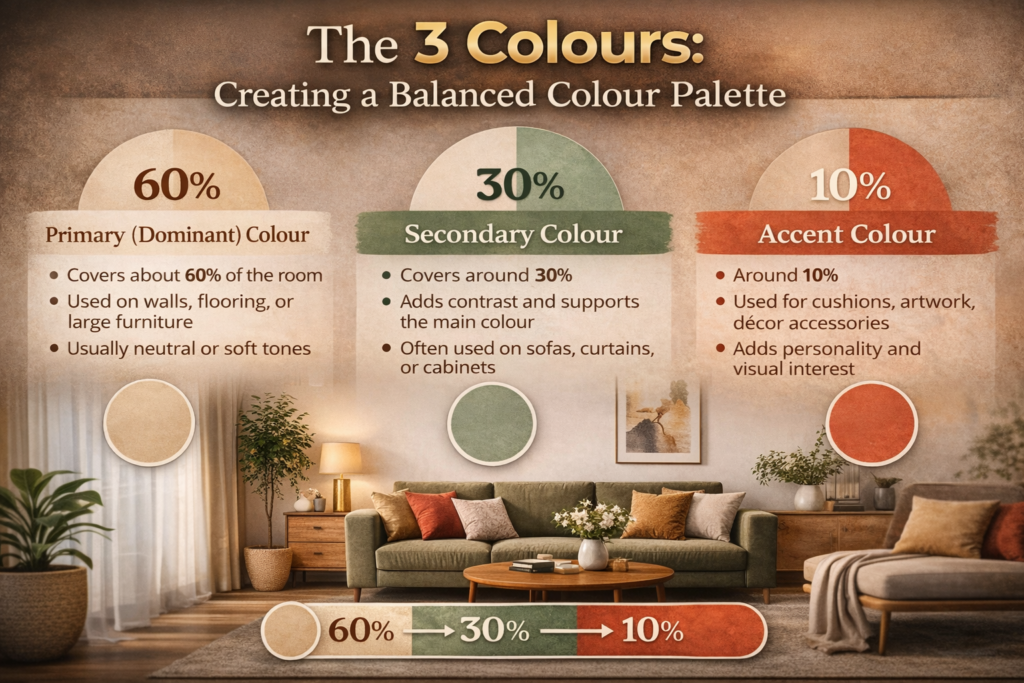
- Primary (Dominant) Colour
- Covers about 60% of the room
- Used on walls, flooring, or large furniture
- Usually neutral or soft tones
- Secondary Colour
- Covers around 30%
- Adds contrast and supports the main colour
- Often used on sofas, curtains, or cabinets
- Accent Colour
- Around 10%
- Used for cushions, artwork, décor accessories
- Adds personality and visual interest
Example for a Living Room
- Primary: Warm beige walls
- Secondary: Olive green sofa
- Accent: Brass or terracotta décor
This method ensures the room looks stylish without overpowering the senses.
The “4” Materials or Textures: Adding Depth and Character
Once the colour palette is set, textures bring the room to life. Texture refers to how surfaces feel or appear visually.
Common Texture Categories
- Wood or Engineered Wood – Furniture, flooring, wall panels
- Soft Textiles – Curtains, cushions, rugs, upholstery
- Metal or Glass – Light fixtures, tables, handles
- Natural or Organic Elements – Stone, plants, woven décor
In Pune homes, this mix works beautifully when adapted to climate-friendly materials—easy-to-clean fabrics, moisture-resistant finishes, and breathable textiles.
Interior professionals, including commercial interior designers in pune, use this method to make offices and retail spaces look premium without excessive decoration.
The “5” Decorative Elements: Styling Without Clutter
Decorative elements are what make a house feel like a home. However, adding too many items can quickly make a space feel messy. The rule suggests limiting visible focal décor elements to five.
Examples of Decorative Elements
- Rug
- Artwork or wall décor
- Lighting fixture (floor lamp or pendant)
- Cushions or throws
- Indoor plants or statement accessories
These five elements should be visually noticeable and well-spaced. This approach keeps interiors clean, functional, and elegant.
Applying the 3-4-5 Rule Room by Room
Living Room
- 3 colours: walls, sofa, accents
- 4 textures: fabric, wood, metal, rug
- 5 elements: sofa, rug, coffee table, lighting, plant
Bedroom
- Soft dominant colour for relaxation
- Textures like cotton bedding, wooden bed, fabric curtains, metal lamps
- Limited décor for a clutter-free environment
Kitchen & Dining Area
- Balanced cabinet colours
- Mix of stone countertops, wooden furniture, metal fixtures, fabric seating
- Minimal décor to keep functionality intact
Commercial Spaces
Offices and retail spaces benefit greatly from this rule. It ensures clarity, brand consistency, and comfortable movement—key reasons commercial interior designers in pune follow proportion-based planning methods.
How the Rule Works for Luxury Interiors
Luxury interiors are not about excess; they are about refinement. The 3-4-5 Rule helps luxury spaces feel rich yet controlled. High-end materials such as marble, brass, or premium fabrics replace standard finishes, while the structure of the rule remains the same.
This is why luxury interior designers in pune rely on design principles rather than trends alone.
Common Mistakes to Avoid
- Using more than three main colours
- Repeating the same texture everywhere
- Filling every corner with décor
- Ignoring lighting and spacing
- Choosing style over comfort
Avoiding these mistakes ensures your interiors age well and remain functional.
When Should You Consult an Interior Designer?
You should work with an interior designer in pune if:
- You want efficient space planning
- You aim for a luxury finish without clutter
- You need professional guidance for material selection
- You are designing offices or commercial properties
Professional designers understand how to apply rules like 3-4-5 while adapting them to your lifestyle, budget, and location.
Conclusion: A Simple Rule for Beautiful Pune Homes
The 3-4-5 Rule proves that good design doesn’t have to be complicated. By limiting colours, textures, and décor thoughtfully, you can create interiors that feel calm, stylish, and timeless. Whether it’s a home, office, or commercial space, this principle brings clarity and balance to every project.
If you’re planning to redesign your space or want expert help applying these principles, 5 Wall Studios offers tailored interior design solutions across Pimpri-Chinchwad, Koregaon Park, Mohammedwadi, Baner, and many nearby areas in Pune. With the right design approach, even the simplest spaces can feel truly exceptional.